
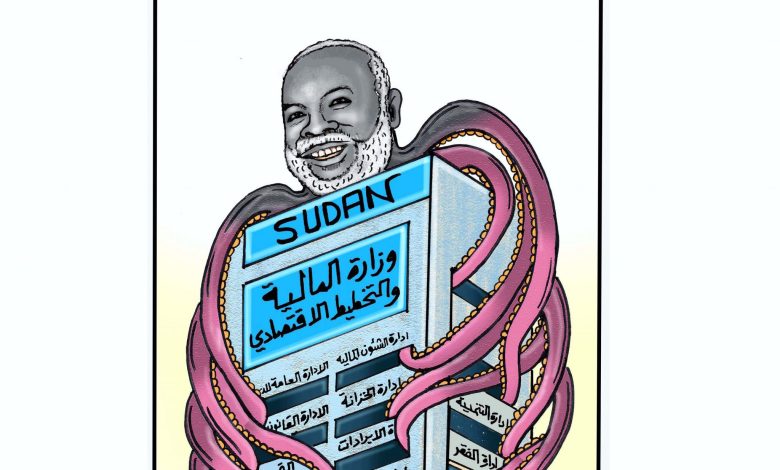
The Man Jumping Between Shores in the Trap of “Frozen Assets”… Jibril Ibrahim-Khartoum Highlight – Musab Mohamed Ali
There is nothing stable in Jibril Ibrahim’s biography. He seems like a man skilled at crossing from one shore to another whenever the river changes course. From an economics student at the University of Khartoum, to a migrant in Japan mastering its language and earning both master’s and doctorate degrees. Then, a university professor in Riyadh, an investor in aviation, and finally a militia leader and finance minister in a collapsing state. His life intersects with Sudan’s own shifts, from troubled civilian ambitions to open civil war.
Taking up arms:
Born in Tina, North Darfur, in 1955. His path took him to Tokyo, where he studied economics. Yet he soon returned to Sudan, burdened with big dreams, quickly swallowed by the noise of guns. After the killing of his brother Khalil, he took over leadership of the Justice and Equality Movement in 2012. He became a political face of an armed project organically tied to Islamists, even while claiming independence from them.
Coup and power:
When Army Commander General Abdel Fattah al-Burhan toppled the civilian government in October 2021, Jibril sided with the military. He knew that supporting the coup meant keeping his seat as finance minister. Even when billions in international aid stopped, plunging Sudan into suffocating isolation. His silent approval or implicit support of the coup was no more than another investment. Power in exchange for civilian blood.
The war:
When war erupted in April 2023, he tried to appear neutral. But he quickly sided with the army. It was not just a military stance, but a political repositioning to guarantee him influence in the new balance of power. The movement once chanting justice and equality turned into an arm of the military institution. It framed war as defending civilians, while being accused on the ground of grave violations.
U.S. sanctions :
The U.S. Treasury imposed sanctions on him and the “Al-Baraa Bin Malik” militia. Charges: destabilizing Sudan and deepening ties with Iran. Washington no longer saw him as an economist or minister, but as an armed politician. One using public funds to cement military and ideological alliances. He tied Khartoum to Tehran in a tense regional moment. He fell into the trap of “frozen assets,” swept up from Sudan’s fragile resources during a time of chaos led by warlords and profiteers.
Hunted by corruption :
Since becoming finance minister, his name drowned in accusations. Financing his movement from state coffers, selling aid, turning the ministry into a fiefdom for his group and relatives, and restoring companies of the ousted regime. He always denies it. But his public image is linked to corruption and nepotism. He became a symbol of the marriage between power and wealth, and of draining the economy of national meaning.
The deadly paradox
In Jibril Ibrahim lies a deadly paradox. A man who studied economics in Japan, where development followed science and discipline. He returned to turn his ministry into a platform funding war and corruption. The academic who could have built a stable economy instead put budget figures into a battle of guns. His name remains a witness to Sudan’s deepest crisis: how the pursuit of power swallows everything. How politics and economics transform into another face of war.