

Tobak : They Offered Money, Tortured Me
Tobak: April 15 War Parties “Murderers”.. A War to Extinguish The Revolution’s Flame

Tobak : They Offered Money, Tortured Me – Tobak: April 15 War Parties “Murderers”.. A War to Extinguish The Revolution’s Flame – Khartoum Highlight
Interview: Omar Al-Faki
Many young people were infiltrated among the protesters. Followed groups wanting to undermine the revolution from within. To bargained to remove my old complaint against me. Also they threatened to deport me to Port Sudan. They said I would be forced to work in salt crushing. The revolution is a burning flame. True revolutionary bodies will return after the war. They will resume the revolution’s goals and restore civilian rule.
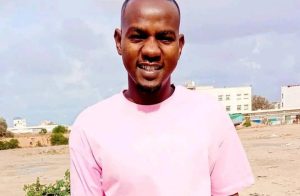
Mohamed Adam, known as “Tobak,” is an icon of resistance against repression and the coup.
He is a distinguished revolutionary. The authorities of the October 25 coup targeted him.
They fabricated charges against him. They detained him with flimsy pretexts. When the war erupted, he left prison like thousands of other detainees. Among them was the deposed president Omar al-Bashir. He now walks freely at the Merowe military base.
Authorities arrested Tobak in Madani. He left after the army withdrew from it. He traveled to Egypt and faced harassment. Then he went to Libya. There he was assaulted. War advocates pressured him to support and mobilize for the war. He refused and held to his principles. Khartoum Highlight interviewed him. He provided important testimonies.
To begin, tell us about the circumstances of your arrest and how it happened.</h6>
I left Egypt after an attempted arrest and deportation to Sudan. I went to Libya. In Libya, I faced an assassination attempt upon arrival. Sudanese attackers stabbed me with a knife. My friend Samir resisted the attackers. He suffered a severe back injury and lung bleeding. I lost my passport during the struggle. I went to the police station to file a lost passport report. This was to prevent anyone from using my passport unlawfully.
At the station they asked me for a paper from the Sudanese embassy proving my Sudanese nationality. They said that I had to go to the embassy. I reached the entrance guarded by four policemen. Then I entered and met an employee. When he saw me he entered the director’s office and told him I had arrived.
The director greeted me. He said, “Welcome back, Mohamed Adam Tobak.” I returned the greeting. The director spoke to me about RSF violations in the Sudanese war. He said I played a major role in the Sudanese revolution. He asked me to work with them on media mobilization. The director said they have camps there and wanted my support. They wanted me to mobilize via my Facebook page, friends, fellow revolutionaries, and demonstrations. They asked me to recruit angry young defectors who support peace.
I refused. Then I told him I will not support this war. Saying that both sides are killers. I said this is a war for power and wealth. It aims to extinguish the revolution’s flame.
Who arrested you and where did the arrest take place?
Those who arrested me were affiliated with the Sudanese embassy. The arrest happened inside the embassy building. They handed me over to a dangerous militia called Radaa militia. The militia has a bad reputation.
Were you interrogated during detention, and what was the nature of that interrogation?
The embassy and Radaa militia interrogation felt like bargaining. They used both inducement and intimidation.
After handing me to the public prosecutor, the investigation was respectful and lawful.
The Attorney General decided the case was political. He refused to hand me over to Port Sudan authorities.
He transferred me to the Refugee Commission.
How long did you stay in detention?
They detained me in the Sudanese embassy in Libya. They handed me to Radaa militia. The militia beat and tortured me. They tried to bargain and threatened to hand me over to Port Sudan. They began an illegal process. Media pressure prevented it. I remained three days with them. They handed me to the public prosecutor. I stayed with the prosecutor for five days. The Attorney General transferred me to the UNHCR. I stayed there for over a month and a half. After that I left Libya.
Did they try to pressure you to change your antiwar stance?
At the Sudanese embassy in Libya, the embassy official told me there was a criminal complaint under Article 130. He said if I cooperated, they would drop the complaint. The man gave me five minutes to decide. He left and closed the office door from the outside. They had not taken my phone then. I sent messages to comrades and friends. Later they opened the door and took my phone. They told me I refused to follow their plan. I reaffirmed my commitment to the December revolution. That I rejected the war. I said any life lost in this war is the responsibility of the war supporters. God will hold accountable those who incite for war.
Were you threatened or tortured inside detention?
Yes. I was beaten and tortured. I suffered injuries during torture. They also threatened to hand me over to Port Sudan authorities and deport me to work in salt crushing. They threatened me with the old complaint under Article 130. It accused me of killing a senior officer during the Sudanese revolution.
Were promises or temptations offered to you, or was it only threats?
They used all methods: inducement, intimidation, and temptations. Also they offered housing, living expenses, and money. They threatened to hand me to Port Sudan authorities and to remove the old complaint against me.
After I refused, they handed me to the notorious Radaa militia. The militia is very dangerous. They said they would hand me over to Port Sudan.
I told them I stole nothing and killed no one. Saying even if they killed me, I would meet God as a martyr, innocent of theft and plunder. I said I will keep my nationalist stance. They replied, “Say that in Port Sudan during your work in the salt fields.” And dragged me on the ground. They bound my hands and I suffered minor injuries. Also they put me in a cell for a full day without food or water. The next day they brought me out and interrogated me.
Accusations
They accused me of killing a senior officer in Sudan. They brought an Interpol affiliate and told me they would deport me to Sudan. The next day the matter escalated publicly through protesters, comrades, and the Somoud Coordination, and Mr. Yasser Arman. After this media escalation they retreated from this illegal step and handed me to the Attorney General.
I stayed five days with the Attorney General. Who came on the fifth day, a Friday, and began interrogating me. He told me my case was political. He said the Sudanese government demanded my handover and paid large sums for it. the Attorney General refused to hand me over. I had explained to him the revolution’s background and youth role. I described the former regime’s traps against revolutionaries.
The Attorney General transferred me to the UNHCR. They placed me in a protection center. I stayed there for over a month and a half. My file was shown to several countries. Then I left Libya.
Do you think young people who once belonged to the revolution and now fight with war parties were infiltrators among the revolution, or did they join out of conviction?
Yes. A large number of young people were infiltrators among the revolutionaries. They followed entities aiming to undermine the revolution. They created rifts among protesters and weakened the civilian front. Also, some young people joined for personal interests and material temptations.
Some accusations claimed revolutionary bodies belonged to military intelligence. Do you agree?
Yes. Several prominent figures were planted among protesters. Many of them have affiliations and follow groups.
There is the “Sons of Burhan” group, the “Sons of Yasser Al-Atta” group, and the “Misbah” group. Some names rose to prominence. After the war began, members from these groups joined the fighting. Some joined knowingly. Others did not know. They joined under different brigade names. If we ask who formed these brigades, the answer relates to the nature of those formations.
In your opinion, can the revolutionary bodies be reorganized after the war and regain momentum, or is it necessary to create new bodies?
We split from a group called “Gadeboon.” All of us chose peaceful means and adhered to the glorious December revolution’s goals. And decided to pause political work. To focused on serving our Sudanese people through (Takkays), emergency rooms, health work, and public kitchens. To help the community at this time because political work is futile now and risky. Therefore, we were heavily targeted. They tried to tempt and accuse us of treason many times. The Sudanese revolution is not people like Tobak alone.
The revolution is a burning flame. True revolutionary bodies will return after the war to continue the revolution’s goals: freedom, peace, justice, and civilian democratic rule. We pledge this with our martyred comrades. We will never betray that pledge.


