
Kamal Omar: The Exclusion of Islamists Is a Phobia Created by the National Congress Party
“The Beneficiary of the War Is the One Who Believes the Change Was a Coup, Not a Revolution”
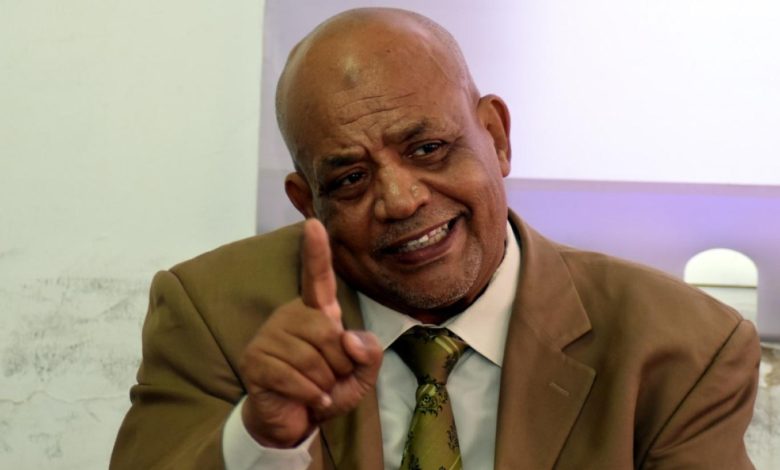
There is no party working to exclude Islamists, and today we are at the heart and center of the political process.
We carry the political genes of Al-Turabi. We could have been isolated based on that identity and history. Not only were we accepted, but we were also pushed to the forefront.
The National Congress Party is the primary beneficiary of the war.
Those who benefited from igniting the war are the ones who believe that this change is not a revolution, but rather a coup. They are the ones who sought, by all means, to destroy the change.
We have been imprisoned, and some of our brothers were killed in our efforts to clear Islam and the Islamic project of the crimes of murder, corruption, and bloodshed.
Some Islamists withdrew into a self-enclosed cave, seeing the entire political space as hostile to them. They refused to recognize the revolution, labeling it a conspiracy and a betrayal by some of their military counterparts.
There are countries in the region that do not want Sudan to be stable, in order to plunder, pirate, and steal its resources.
By Omar Al-Faki – Khartoum Highlight
In an interview with Khartoum Highlight, Popular Congress Party leader Kamal Omar firmly denied that Islamists are being excluded by the civilian political forces. He stated, “The evidence is that they are now at the center of the political process in Sudan,” explaining that they carry the political legacy of Al-Turabi, yet “no one said these are Islamists and must be excluded.” He added, “We could have been marginalized for that identity and history.”
Omar noted that the claim of Islamists being targeted is inaccurate. “Those who say this are the ones who created this phobia, believed it, and treated others and the broader political space with open hostility. That space ultimately isolated them.”
The question of who fired the first shot in Sudan’s war has been frequently raised. What is your opinion regarding Dr. Mohamed Badr El-Din’s statement accusing the National Congress Party of igniting it? Do you agree with him?
“Of course, out of organizational respect, especially when asked about a position made by a fellow party member like Mohamed Badr El-Din—the deputy secretary-general—his statements reflect the party’s stance. What he said is the party’s position and these are undeniable facts. I do not disagree with him—in fact, I fully agree. These are clear facts.”
A narrative frequently repeated by supporters of the war claims that civilian political forces are excluding Islamists from the scene. Is there any real exclusion?
“Not all Islamists are being excluded—only some, particularly the National Congress Party, which operates under the Islamist banner and creates gatherings to amplify their own image. Some Islamists imposed isolation on themselves, withdrawing into a closed organizational bubble and seeing the political space as entirely against them. They refused to recognize the revolution, calling it a conspiracy and a betrayal by some of their military allies. This is simply untrue. It was a real revolution that toppled a regime—not necessarily the Islamic project—but a regime mistakenly associated with Islam and Islamists. We disavowed it and left. Sheikh Hassan Al-Turabi criticized that regime, its corruption, and its actions. We were imprisoned, and some of our brothers were killed during this internal rift, all in an effort to clear Islam and the Islamic project of the crimes of killing, corruption, and bloodshed. Today, the image of Islamists in Sudan’s crisis does not reflect Islam.”
“There is no party actively working to exclude Islamists. The proof is that we are now sitting at the heart of the political process. No one has said, ‘These are Islamists and must be removed.’ On the contrary, we carry Al-Turabi’s political legacy, and we could have been marginalized because of it. Yet not only were we accepted—we were pushed to the forefront. Therefore, claims about targeting Islamists, the Muslim Brotherhood, or the Islamic movement are false. Those who promote such claims are the ones who created the phobia, believed it, and lived in it. They dealt with others with severe hostility and open animosity towards the broader political space, which in turn imposed isolation on them.”
In your view, who is benefiting from igniting and prolonging the war, and from obstructing any negotiation process to stop it?
“The real beneficiary is the one whose failed project once ruled this country and corrupted it. The one who sees this change not as a revolution, but as a coup. The one who tried through every possible means to sabotage this change. That’s who benefits from this war.”
From your perspective, what is the way out of this chaos, fighting, and destruction?
“The solution is to expand the scope of civilian pressure. We are currently working on strengthening the civilian umbrella, and we must create real mechanisms to stop the war and pressure its parties. Those waiting for salvation from abroad—I won’t say they are delusional, but I believe their wait will be long. The solution lies within Sudan. The warring parties and the political forces calling for an end to the war, as well as those entrenched in supporting it, must assess and evaluate the situation. This war won’t end easily. It’s a long and fierce conflict, resembling the tribal wars of Dahis and Ghabra. It is shameful and embarrassing to see the world progressing around us while wars stop everywhere—except in Sudan.”
“The war parties in Sudan are being fueled by regional and international actors who do not want stability for Sudan, but rather aim to plunder its resources. There are countries in the region that do not wish to see a stable Sudan, because it would deprive them of looting, piracy, and the theft of Sudan’s potential.”
May God guide everyone to reach a resolution to end the war in Sudan.