

Climate Change Dries the World’s Water and Devours Its Food
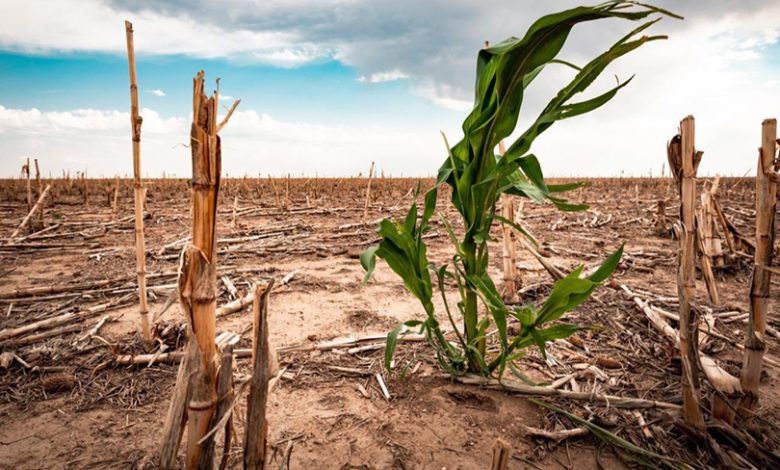
Khartoum highlight – Drought is advancing, devouring the world’s food, the United Nations warns in a new climate change report. The report says drought costs the world over $300 billion annually, driven by human-caused environmental destruction. It warns that drought could affect 75% of the global population by 2050, with annual costs exceeding $307 billion. The UN calls for investment in “nature-based solutions” such as reforestation, grazing management, and water conservation.
These measures aim to cut drought costs and maximize environmental benefits. Kaveh Madani, a report contributor, says drought’s economic cost goes beyond immediate agricultural losses. It disrupts supply chains, reduces GDP, affects livelihoods, and causes long-term problems like hunger, unemployment, and migration. The Food and Agriculture Organization (FAO) warns soil salinization currently affects 10.7 percent of Earth’s surface. FAO predicts this will worsen due to climate change, causing severe agricultural consequences.
Soil Salinization Threatens Agriculture and Shrinks Global Yields
Its report notes 1.4 billion hectares of land are salt-affected, possibly expanding by another billion hectares this century. Some soils are naturally salty or sodium-rich, supporting plants adapted to harsh conditions. However, soil salt content can rise quickly with climate change, including more droughts and melting permafrost. Human activities such as deforestation, poor irrigation, over pumping, excessive fertilizers, and road salting also increase salinity.
High salinity directly harms agriculture, reducing yields by up to 70% for crops like rice, beans, sugarcane, and potatoes. Currently, 10 percent of the world’s arable land is salt-affected, notably in China, the U.S., and Afghanistan. Climate change could raise this to 24–32 percent by century’s end, especially in Latin America, Southwest U.S., Australia, and South Africa. Rising seas threaten over one billion coastal residents with gradual land submersion and soil salinization.
Countries at risk include Bangladesh, China, Vietnam, and Egypt. Farmer suicides in India have long been a problem, worsened by climate change-related extreme weather. Expanding drought zones worsen farmers’ hardships, pushing more toward suicide as crops fail. Irregular rainfall, floods, and extreme heat reduce harvests in many Indian regions. Climate change also limits global crop productivity, even with agricultural adaptation.
A scientific study says six key crops, including wheat and rice, will lose 11–24 percent of caloric output by 2100. Each extra degree of warming cuts food calories by 120 per person daily, or 4.4 percent of today’s intake. Solomon Hsiang of Stanford University says a 3°C rise equals skipping breakfast for every person on Earth. The study, published in Nature, took eight years, covering 55 countries with researchers from 15 universities. It was conducted by the Climate Impact Lab, a research coalition at the University of Chicago.
Wheat calorie yields could drop 30–40 percent in China, Russia, the U.S., and Canada, major global producers. Corn output could fall 40% under high-emission scenarios in the U.S. grain belt, Central Asia, and Southern Africa. In Latin America and Central Africa, losses may be milder at about 15%, thanks to heavy rainfall.
Source: AFP


